
3November 2026
Winter arrives differently downtown
A downtown Toronto winter does not just get cold. It gets windy between the towers, damp off the lake, and freeze-and-thaw for weeks at a time around 0 degrees. In a high-rise in Liberty Village or King West, that means pressure on every seal facing the wind, thirty or forty storeys up where there is nothing to slow it down. In a Victorian semi in Cabbagetown, Leslieville or Riverdale, it means an older front door, original or long-settled window frames, and small gaps that have quietly widened since last January. The jobs are different, but the pattern is the same: cold air finds the edges first — balcony doors, windows, and entry doors — long before a home actually feels under-heated.
November is the right month to deal with those edges. Caulking still cures properly in cool weather, the first drafts are easy to feel, and you are not booking fixes in the week of the first deep freeze. This guide works through the three places downtown homes lose the most comfort — the balcony door, high-rise windows and frames, and the front door of an older house — and what a handyman can and cannot touch in a condo building.
Balcony doors: the biggest single source of a condo draft
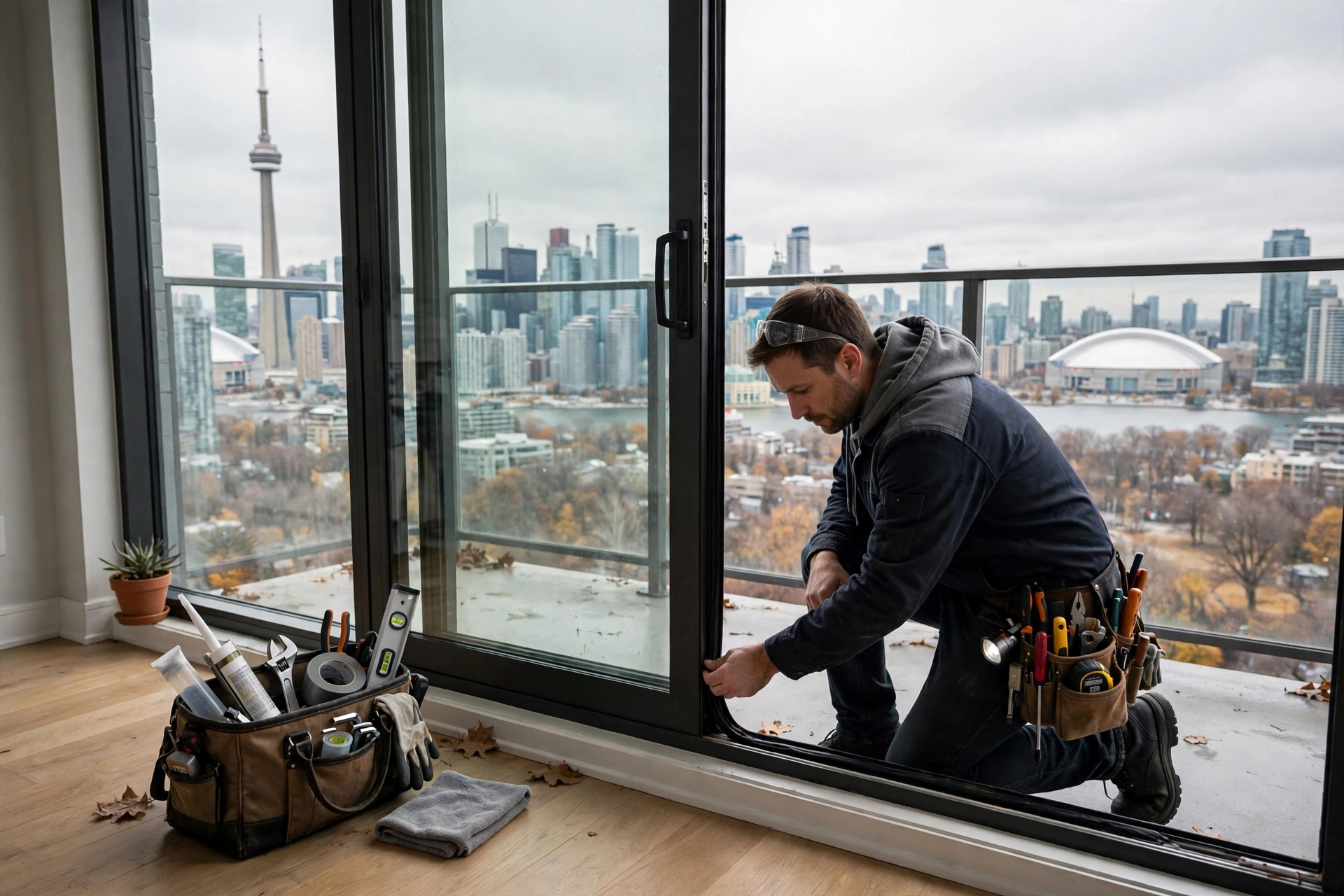
In most downtown condos, the balcony door is the largest opening in the outside wall, and it works the hardest. A sliding door in a St. Lawrence or Queen West unit rolls open and closed hundreds of times a summer, its track filling with dust, grit and balcony debris. By fall, three things have usually gone at once: the rollers have worn or seized so the panel no longer sits square, the weatherstripping along the meeting rail has flattened or torn, and the track is dirty enough that the door never quite closes the last few millimetres. The result is a door that looks shut and still lets a thin, constant ribbon of cold air in at the bottom corner.
The fix starts with cleaning, not parts. A vacuumed and scrubbed track, freed rollers, and a panel adjusted so it meets the frame evenly will solve a surprising share of balcony drafts on their own. What is left after that is seal work: replacing worn pile weatherstripping, checking the latch so it pulls the panel tight rather than just holding it closed, and resealing the frame where the old sealant has split. If a door still drags after that, a warped panel or failed hardware is a different conversation from a seal.
One condo warning matters here. The outside face of the balcony door, the balcony slab and the exterior window frames are common elements in most downtown buildings — they belong to the condominium corporation, not the unit. Interior seals, tracks, rollers and the inside bead of caulking are normally yours to maintain; the exterior side is often the building’s to repair. If cold air is coming around the outside of the frame itself, report it to property management as well as booking the interior work, so the building’s side and your side are not each waiting on the other.

High-rise drafts: why upper floors whistle
Owners on higher floors in Corktown, the Distillery District and along the waterfront often describe the same thing: a window or door that was fine in September whistles, rattles or feels cold on one side in January. That is not imagination. Tall buildings act like chimneys in winter — warm air rises and escapes at the top, pulling cold air in at every weak seal below — and wind pressure on an exposed face can push air through gaps that feel tight on a calm day. A seal that is merely old, not visibly broken, can be the whole problem at height.
Finding the leak is a methodical job, not a guessing one. On a windy day, a hand run slowly around the frame, the balcony door meeting rail, electrical outlets on exterior walls and the bottom of the entry door will locate most drafts. The stubborn ones show themselves in subtler ways: a curtain moving when everything is closed, condensation or frost forming on one corner of a window and not the others, or one room that never quite matches the temperature of the rest of a small unit. Mark the spots when you feel them. A draft that cannot be found on a mild, still afternoon is not gone — it is just waiting for the next north wind.
Condo suite entry doors count too: air and hallway noise slipping under the bottom is usually a door sweep or threshold gap, not a door problem.
Window caulking: the inside bead is yours, and it matters
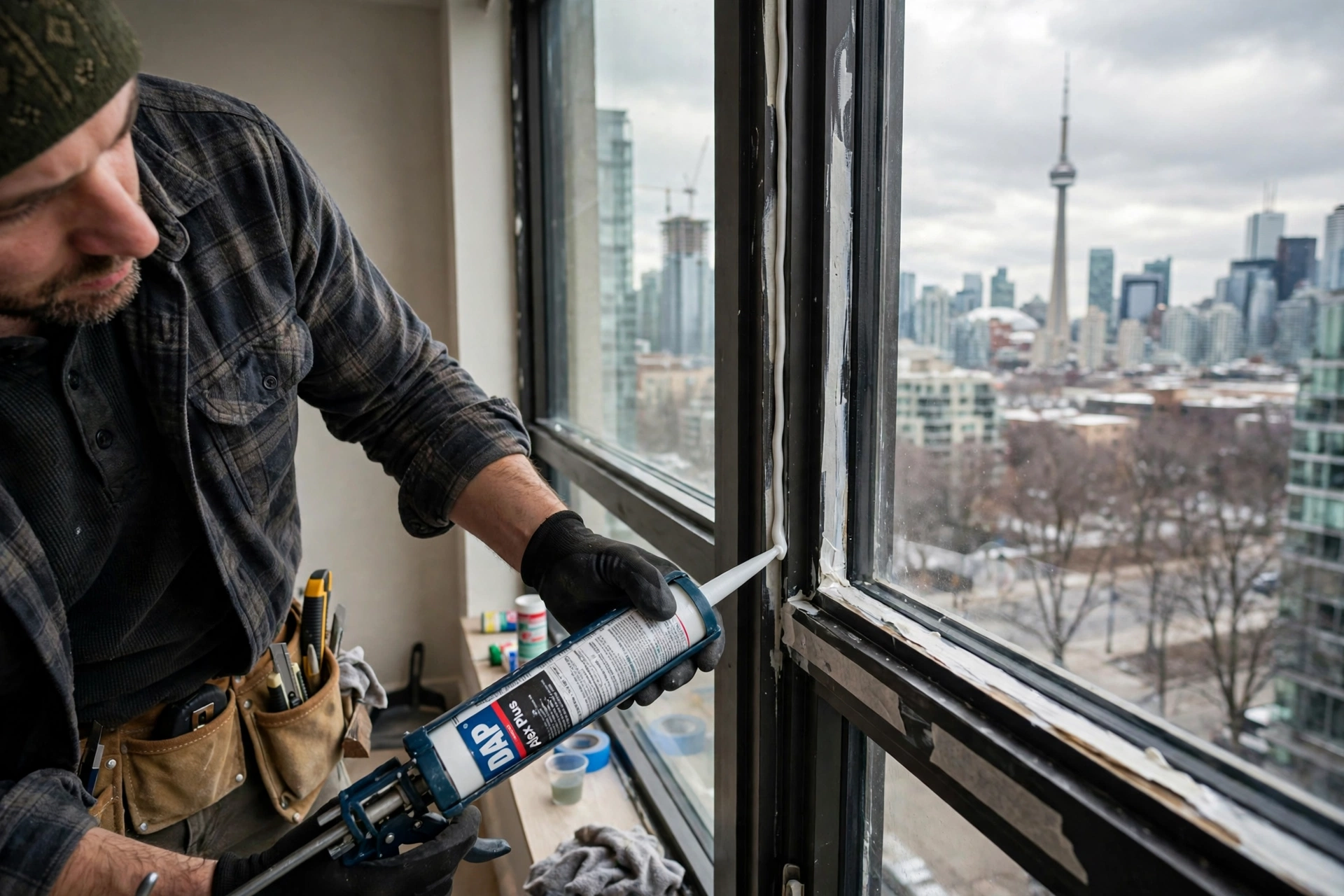
Interior window caulking does unglamorous, essential work. It seals the joint between the window frame and the drywall or trim around it, and when it dries, shrinks and splits — as it does in every heated, dry winter interior — cold air slips behind the trim and the wall around the window feels cold even when the glass itself is fine. In older conversions in Leslieville and Riverdale, and in lofts with large industrial-style windows, there is simply more of this joint per room, so more of it to fail.
Good caulking work is mostly removal work. The old, split bead has to come out cleanly, the joint has to be dry, and the new bead has to be sized to the gap rather than smeared over it — fresh caulk laid over cracked caulk is a cosmetic pass that fails the same way by spring. That is exactly the work covered by professional caulking services, and it belongs on the same visit list as bathroom and kitchen caulking that has gone mouldy or separated, since both jobs are about getting a clean joint to seal properly again.
Keep the condo boundary in mind here, too. Sealing the interior joint around your windows is unit-owner work. Resealing the exterior of the window system, replacing a failed sealed glass unit that fogs between the panes, or repairing the frame itself is, in most buildings, the corporation’s responsibility. Book what is yours, report what is theirs, and do not pay privately to reseal the outside of a tower window from inside — it does not fix the exterior joint and the building needs the report on record if the same stack of units is leaking.
Older downtown houses: doors, frames and settled openings
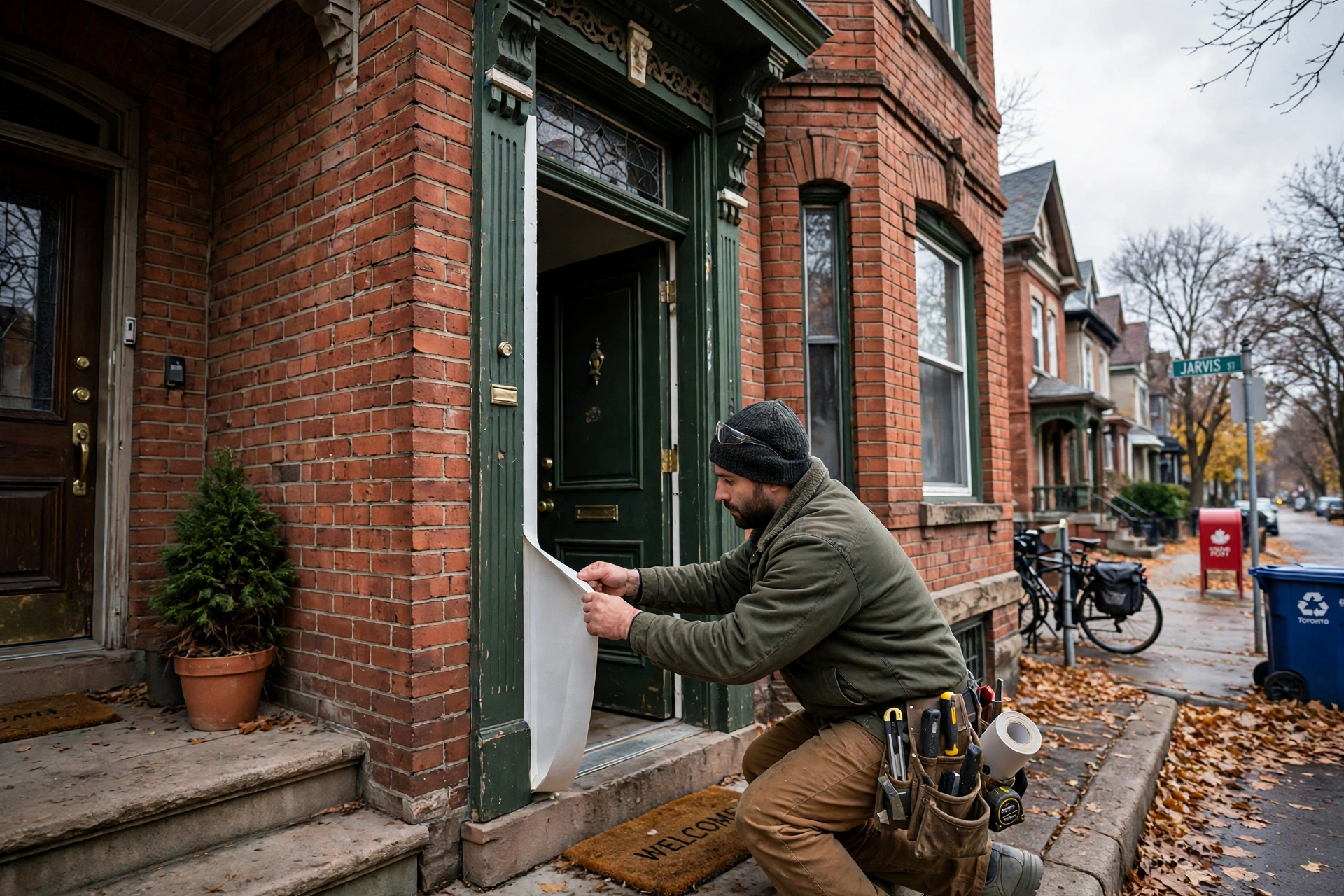
A Victorian semi or row house in Cabbagetown, the Annex or Riverdale plays by different rules from a condo. There is no property manager and no common element — the whole envelope is yours — and the house itself has settled for more than a century. Doors hang a little out of square, window frames have moved a fraction, and the gap at the top of the front door is wider than the gap at the bottom. That is normal for the housing stock, and winter work on these houses starts with fitting the seal to the opening that exists, not the opening that was built in 1890.
For doors, that is the work of proper weather stripping installation: a seal that compresses evenly around a slightly uneven frame, a door sweep that meets the threshold without dragging on century-old floors, and a latch adjusted so the door pulls into the seal instead of resting against it. Done well, a treated front door in a Queen West row house closes with a soft, even resistance — and the hall behind it stops being the coldest room in the house.
Windows in older semis split into two groups. Modern replacement windows need the same interior caulking check as a condo. Older wood windows need their sash checked for rattling gaps, their locks pulling the meeting rails together, and any putty or seal failure noted before it becomes a spring repair. And watch the walls themselves as the heating season starts: fine cracks that open around window and door frames in older plaster-era homes are often just seasonal movement, but a crack that grows, stains or feels damp is worth a closer look through drywall repair rather than another coat of paint.
What affects the cost of winter prep work
There are no honest flat figures for this work, because no two downtown homes leak in the same places. What affects the cost is consistent: how many openings need attention, since a single visit that seals the balcony door, two windows and the entry door is far more efficient than three separate trips; the condition of what is already there, because cleaning and adjusting a door costs a handyman’s time while worn rollers, torn seals or a failed sweep have to be sourced and replaced; access, especially in condos, where a booked service elevator, permitted work hours and parking near the building decide how much of a visit is work and how much is logistics; and where the problem actually sits, because interior seals are straightforward owner work while an exterior frame problem in a condo becomes a building report rather than a bill.
A November checklist for downtown homes
- Run a hand around the balcony door, windows and entry door on a windy evening and mark every draft you feel.
- Vacuum and scrub the balcony door track, and check that the panel closes square and latches tight.
- Look at the interior caulking around every window for splits, shrinkage or gaps behind the trim.
- Check the front or suite door: light showing at an edge, or a loose sweep at the bottom, means the seal is done.
- In a condo, separate your list into unit work and building work, and report the exterior items to property management early.
- Batch the fixes into one visit, and book it before the first deep freeze rather than during it.
A sealed balcony door, a quiet window frame and a front door that meets its weatherstripping will not shorten winter — but they will make the home inside those seals feel different until spring.
Feeling the drafts already? Call Peter at 289-814-7733 or send your list through our contact page and get the seals sorted before the cold settles in.