
26October 2026
Why condo jobs downtown are a different kind of handyman work
A handyman job in a downtown Toronto condo rarely starts at your front door. It starts at the concierge desk, with a building’s rules about when work can happen, which elevator it can travel in, and what paperwork has to be on file before anyone carries a ladder through the lobby. Owners in Liberty Village, King West, Corktown, the Distillery District and the St. Lawrence learn this quickly, usually the first time a delivery driver or a tradesperson is turned away for showing up unannounced.
The work itself is familiar — a TV to mount, a drywall ding to patch, a balcony door that whistles in a January wind. What makes it condo work is everything around it: the booked service elevator, the padded walls, the superintendent’s sign-in sheet, the quiet hours, and a unit that may be 550 square feet with nowhere to swing a sheet of drywall. Get the building side right and the small jobs stay small. Get it wrong and a one-hour fix turns into a wasted trip and a rebooking fee conversation nobody wants.
This guide walks through how downtown buildings actually run, then the jobs condo owners book most — and what affects the cost of each, since in a condo the building’s logistics shape the job as much as the repair itself.
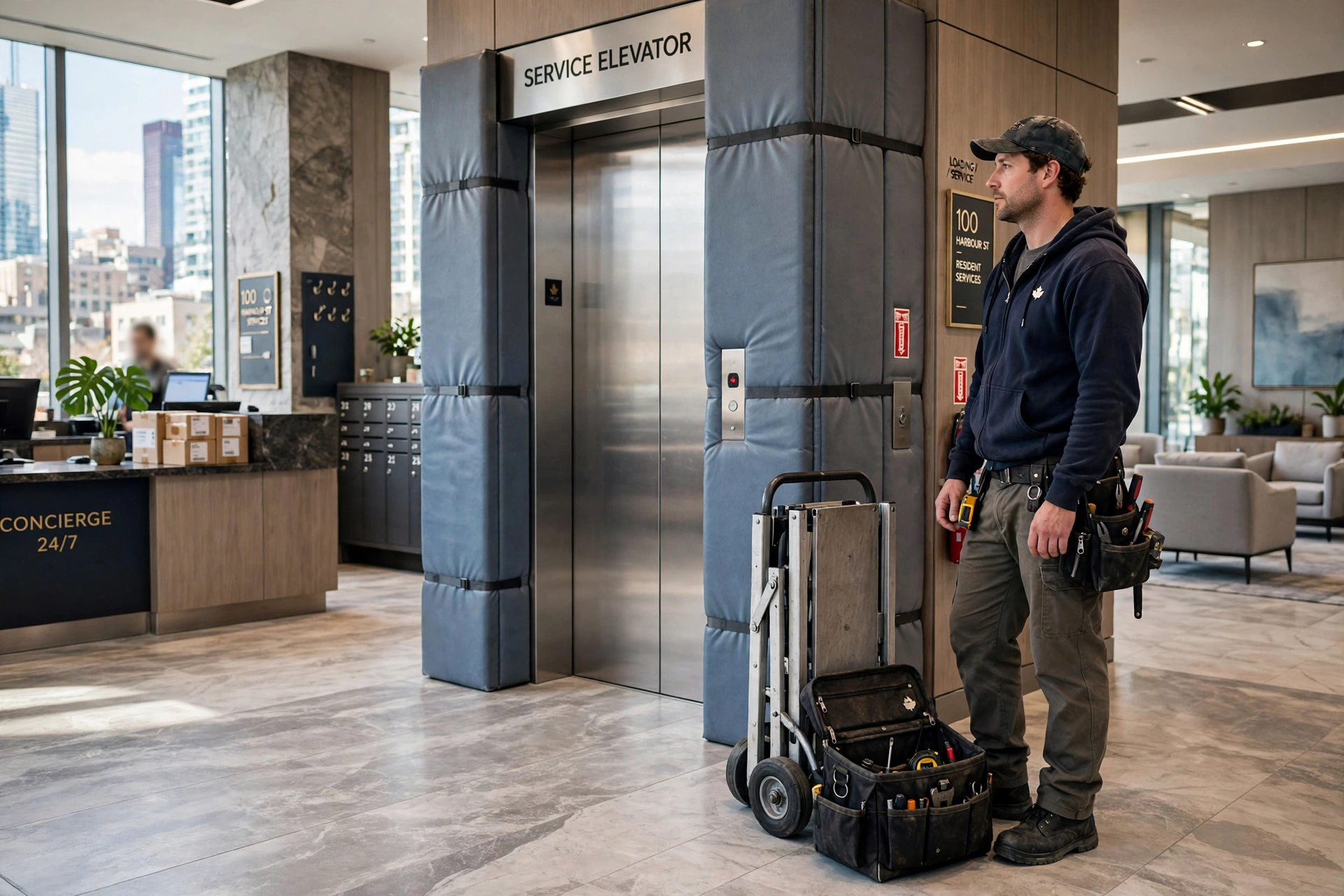
The building rules that decide how the visit goes
Book the service elevator — early. Almost every downtown tower reserves its service or moving elevator for trades, deliveries and moves, and in busy buildings around King West and Liberty Village the good weekday slots go days ahead. A booking usually comes with a fixed window, protective pads the building hangs itself, and a route in through the loading dock rather than the front lobby. If your handyman arrives to find the elevator committed to a move, there is no workaround: the job waits or the job is rescheduled.
Work inside the permitted hours. Most condominiums restrict noisy work to weekday daytime hours, with no drilling on evenings, Sundays or holidays. That matters for planning: a job that needs a hammer drill into concrete — mounting into a structural wall, for example — has to land inside that window, while quiet work like caulking or adjusting a door can sometimes fit at the edges of it. Check your building’s rules before you book, not after.
Paperwork comes first. Many property managers ask trades to sign in, show identification, and provide proof of insurance before starting, and some buildings want the visit registered by the unit owner in advance. Owners who live in the unit can usually sort this with a call to the concierge. Landlords booking work for a tenanted unit should confirm both the building’s requirements and access with their tenant — a handyman standing in a lobby with no one able to let him into the unit helps no one.
Respect the small-space logistics. Downtown parking is scarce, loading docks have time limits, and a one-bedroom in Queen West or a Corktown loft has no garage to stage materials in. The efficient pattern is a single, well-planned visit: measurements and photos shared ahead of time, materials confirmed before the day, and a list of small jobs batched together so one elevator booking covers all of them.
The jobs downtown condo owners book most
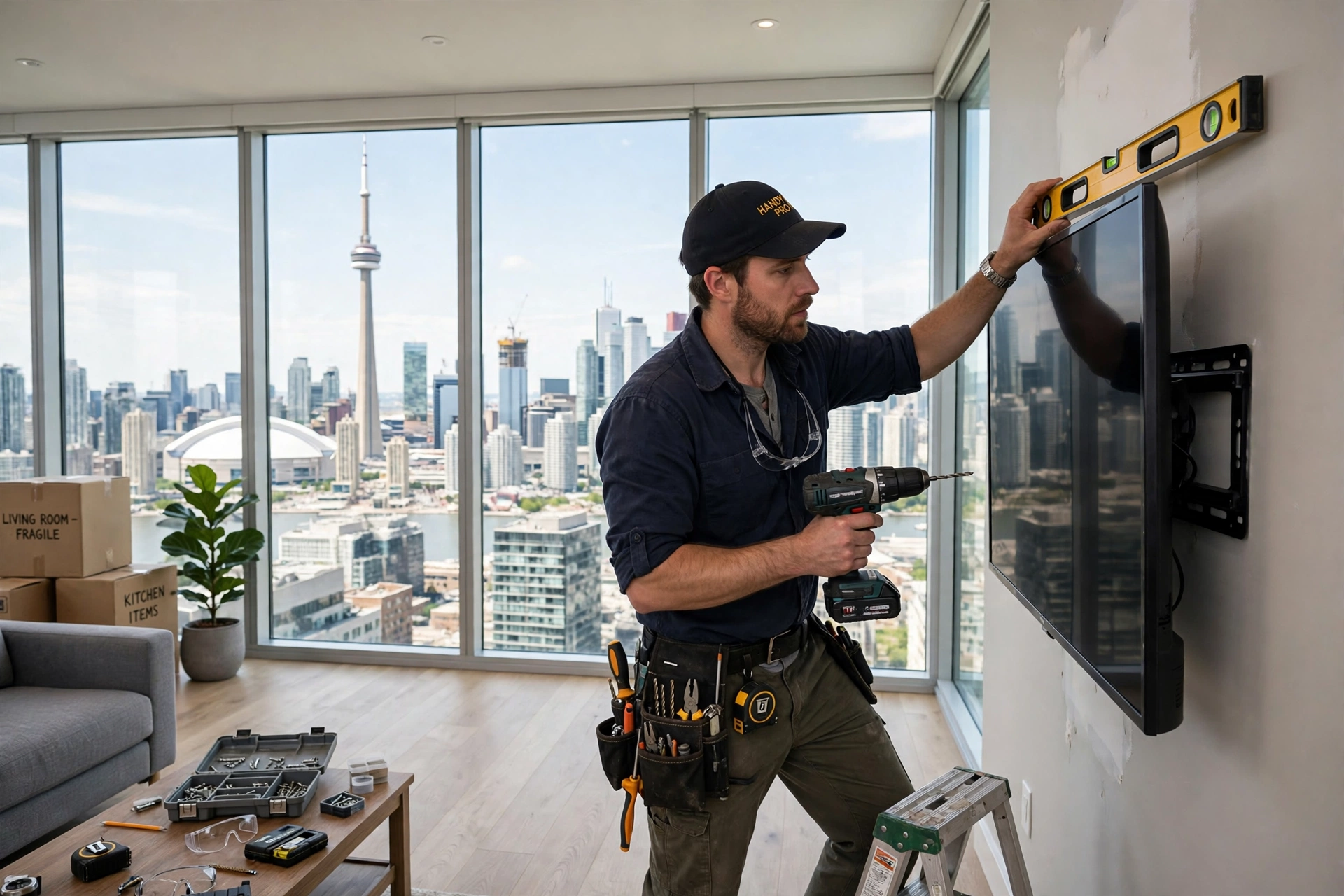
TV mounting on condo walls. This is the classic downtown booking, and the wall decides everything. Newer towers are often steel-stud with drywall, which needs the right anchors and a different approach than wood studs; many converted lofts in King West and the Distillery District hide concrete or brick behind the finish. Buildings also have views on drilling into shared and exterior walls. Done properly, TV wall mounting includes finding the structure, choosing hardware rated for that wall type, and routing cables so the result looks finished rather than improvised.
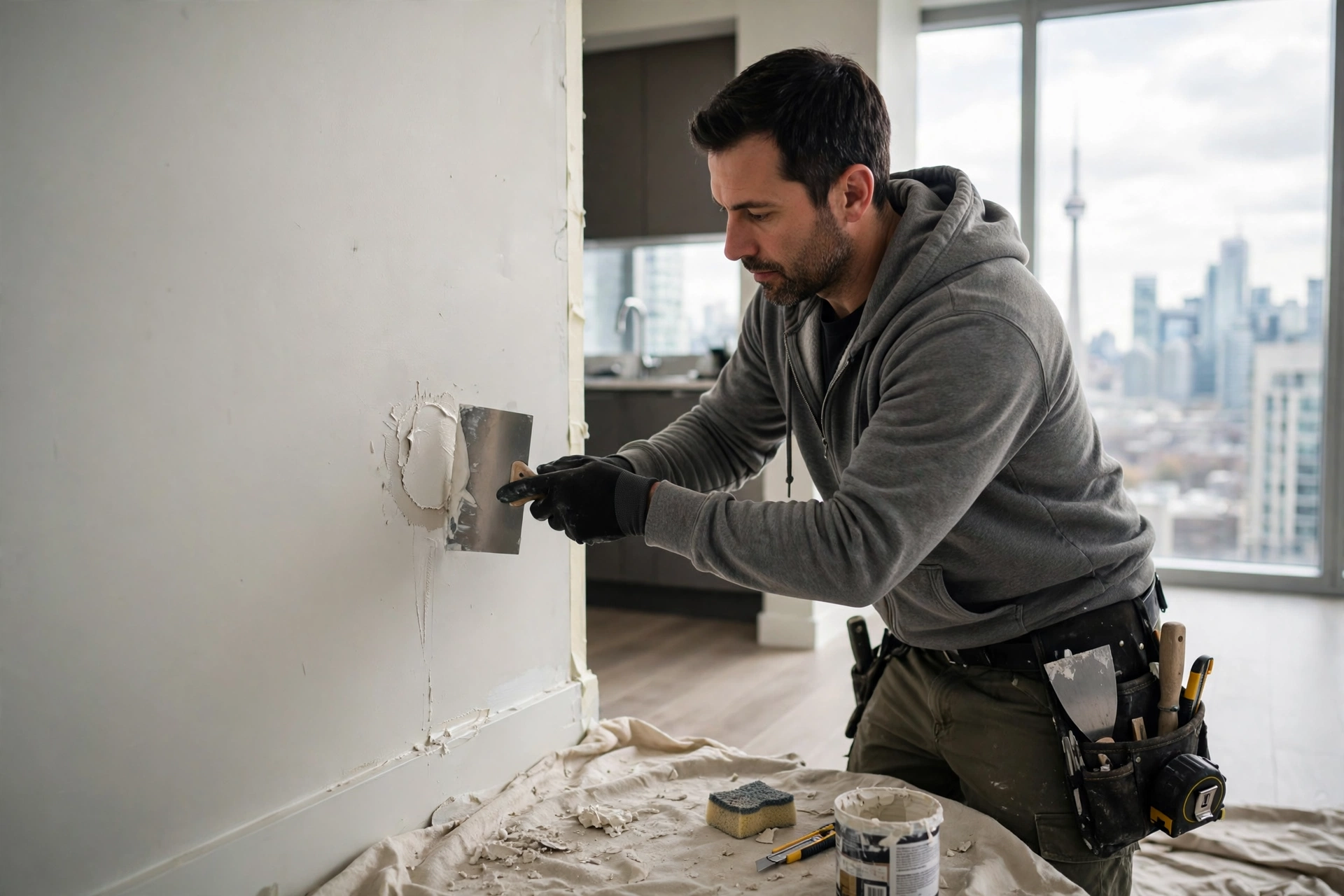
Drywall dings, dents and doorknob holes. Condo drywall takes a beating in small spaces: furniture corners in narrow hallways, suitcase wheels, the doorknob that meets the wall every time the entry door swings in a tight foyer. Add the cracks that appear around windows in older low-rise conversions in Leslieville-facing Corktown and the Annex fringe, and patching is steady work. Small patches are straightforward; the skill is in blending texture and paint so the repair disappears under the flat light of a north-facing unit. Larger or water-stained damage deserves a proper look first — professional drywall repair starts with finding out whether the mark is cosmetic or a symptom of a leak the building needs to know about.
Furniture assembly in tight quarters. Flat-pack furniture and downtown condos are made for each other, and so are the headaches: boxes that barely fit the elevator, instructions spread across a floor that is also the living room, and pieces that must be built in the room because they will never make the turn in the hallway once assembled. Booking furniture assembly is often less about the Allen key than about the logistics — getting it in, building it in place, anchoring tall pieces to the wall for safety, and taking the mountain of cardboard down to the recycling room the building insists you use.
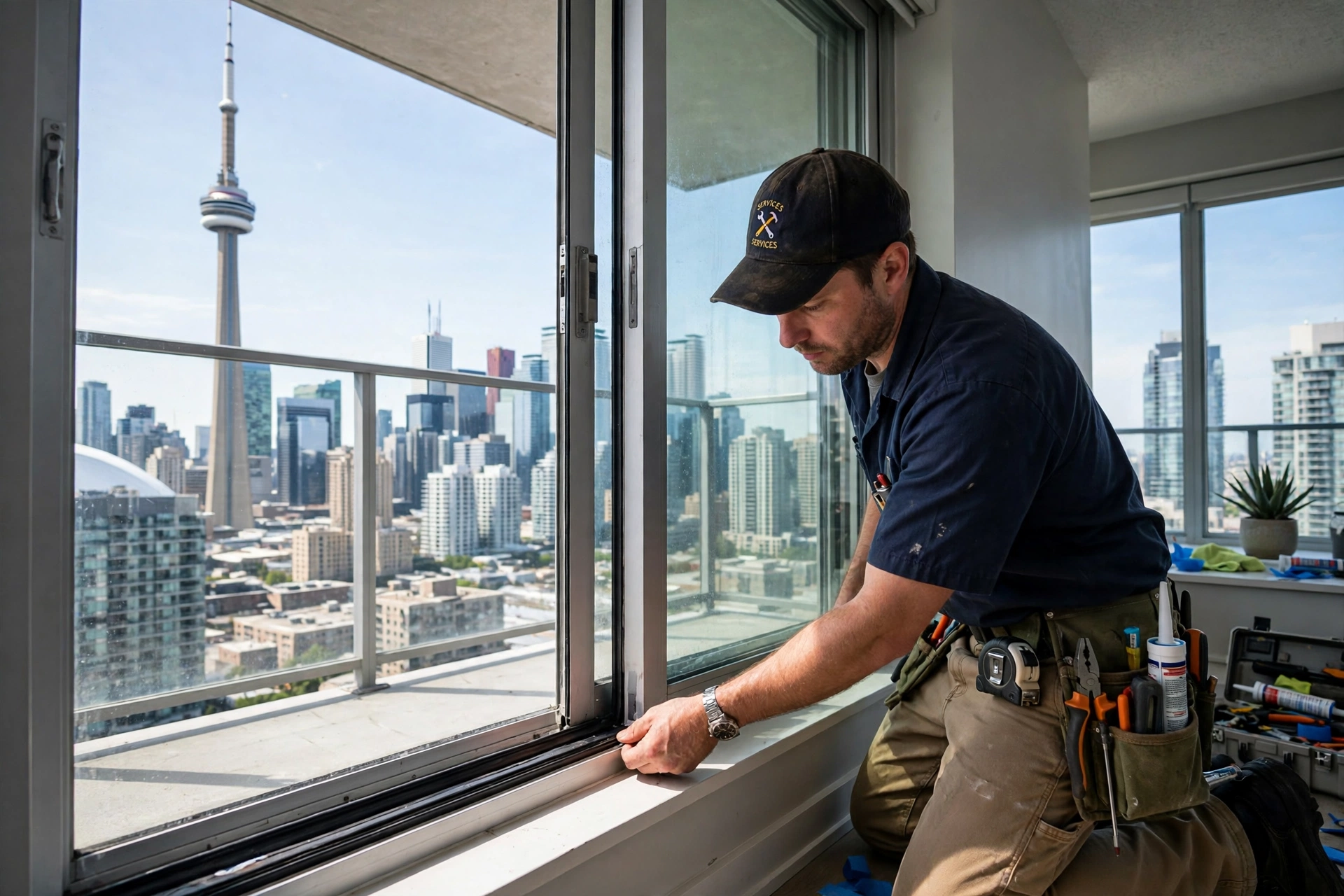
Balcony door seals and high-rise drafts. Thirty storeys up, Toronto wind is a different force. Sliding balcony doors in towers from the St. Lawrence to Humber Bay-facing Liberty Village lose their seal, rollers wear, and tracks fill with grit until the door drags and cold air pours around the frame. Cleaning and adjusting the track, replacing worn weatherstripping, and resealing the frame are small jobs that change how a unit feels all winter. Window caulking belongs on the same list: the sealant on the inside of condo windows dries and splits, and a fresh bead is quiet, invisible work that pays off every windy night.
The rest of the regular list. Bathroom caulking and grout refresh around tubs and showers. Curtain rods and blackout blinds into steel studs or concrete headers. Closet shelving and organizers in the one storage space the unit has. Picture hanging on walls you cannot afford to pepper with test holes. Door adjustments, loose handles, and lock changes when a unit turns over. None of it is glamorous, and all of it is the difference between a unit that works and one that quietly irritates you every day.
What affects the cost in a condo
There are no honest one-size figures for condo work, because the building is part of the job. What affects the cost is consistent, though: how many separate jobs are batched into one visit, since one elevator booking and one trip downtown can cover a whole list; the wall or floor construction involved, because concrete and steel stud take different hardware and more time than wood framing; whether materials and parts are supplied ahead or have to be sourced mid-job; the building’s permitted hours, which can split a bigger job across two windows; and access itself — a booked elevator, available loading dock and a parking spot nearby make a visit efficient, while a missed booking wastes everyone’s day. Sharing photos, measurements and your building’s rules when you book is the simplest way to get an accurate quote and a single-visit fix.
A short booking checklist for condo owners
- Confirm your building’s work hours and noise rules with the concierge or property manager.
- Book the service elevator for the visit window — and confirm who needs to book it, owner or resident.
- Ask what sign-in or insurance paperwork the building wants from trades.
- Batch your small jobs into one list so one visit covers them all.
- Share photos and measurements ahead of time, especially for mounting, shelving and assembly work.
- Clear the work area and the path from the door — in a small unit, access is half the job.
Downtown condo living rewards owners who stay ahead of the small stuff. A door that seals, a TV that is properly mounted, a patch you cannot see — handled inside the building’s rules, these are quick, tidy jobs. Handled without them, they are the stories people tell about the handyman who got turned away at the desk.
Have a list building up in your condo? Call Peter at 289-814-7733 or send the list through our contact page — one booked visit can usually clear it.