
11August 2026
As a handyman working across downtown Toronto, I deal with locks almost every day. One of the questions I hear more and more from homeowners, landlords, and condo owners is simple: should I install a smart lock or stick with a traditional lock?
The answer isn’t as simple as buying the lock with the most features.
I’ve worked on everything from 100-year-old Victorian homes in Cabbagetown and The Beaches to modern condos in CityPlace and rental properties around the Annex and Trinity Bellwoods. I’ve installed smart locks that worked beautifully and I’ve also been called to emergency jobs where a cheap smart lock turned a simple lock problem into a three-hour ordeal.
My biggest lesson from all of those jobs is this:
The lock is only as good as the door it is protecting.
You can spend hundreds of dollars on an advanced smart lock, but if your door is warped, poorly aligned, or difficult to lock, you’re creating a problem rather than solving one.
Smart Locks vs Traditional Locks: What’s the Real Difference?
A traditional lock is primarily mechanical. A key or mechanical keypad operates the locking mechanism, and there are no batteries, Wi-Fi connections, apps, or electronic motors involved.
A smart lock adds technology to the equation. Depending on the model, you might get smartphone control, remote access, temporary PIN codes, activity notifications, automatic locking, or integration with a smart-home system.
That technology can be incredibly useful. But it also introduces additional points of failure.
From my perspective, the right question isn’t “Which lock is better?”
It’s “Which lock makes sense for this particular door and this particular homeowner?”
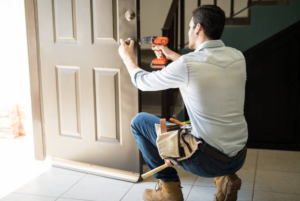
Traditional Locks Are Hard to Beat for Reliability
There’s a reason traditional mechanical locks have been around for so long.
A good-quality mechanical lock can last for decades. There are no batteries to replace and no software updates to worry about. If something eventually wears out, it’s usually a mechanical component that can be repaired or replaced.
Traditional locks are also much more forgiving when you’re dealing with older Toronto homes.
I’ve worked on plenty of doors that are slightly warped, have settled over the years, or move with seasonal humidity. With a mechanical lock, I can often make small adjustments to the strike plate, hinges, or mortise and get everything working properly.
That doesn’t mean traditional locks are perfect.
A conventional key can be lost or copied, and lower-quality cylinders may be vulnerable to various forms of physical attack. If security is a priority, I generally recommend quality high-security hardware rather than the cheapest deadbolt on the shelf.
For some homeowners, however, simple is exactly what they want.
Install a quality mechanical lock, maintain the door properly, and you may not have to think about it again for years.
Smart Locks Offer Convenience You Can’t Get From a Basic Lock
Smart locks have some genuinely useful advantages.
For a busy family, being able to give children their own PIN instead of handing them a physical key can be extremely convenient.
For a landlord, the advantages can be even greater.
Instead of arranging a key exchange every time a tenant, cleaner, contractor, or guest needs access, you can create a temporary code and remove it later.
That’s particularly useful for rental properties and short-term rentals.
Smart locks can also give you information that a traditional lock simply can’t provide. Depending on the system, you may be able to see when someone entered, receive notifications, or control access remotely.
The technology isn’t the problem.
The problem is using the technology on the wrong door or buying a poorly made lock simply because it has a long list of features.
The Biggest Problem With Smart Locks Is Often the Door
This is the first thing I check when someone asks me to install a smart lock.
I don’t start by looking at the app.
I look at the door.
If you have to pull the door toward you, push against it, lift the handle, or shoulder the door just to get the deadbolt into the strike plate, you’ve already got a problem.
A motorized smart lock isn’t going to magically fix that.
In fact, it can make the problem worse.
The motor is trying to move the deadbolt against resistance. It can struggle, consume batteries much faster, and eventually damage the mechanism.
My One-Finger Test
I have a simple rule I use with customers.
Close the door completely and try to operate the deadbolt with one finger.
The bolt should move smoothly into the strike without you having to force the door into position.
If you can operate it easily, that’s a good sign.
If you have to wrestle with the door, stop before buying a smart lock.
Fix the alignment first.
Sometimes the solution is as simple as tightening hinge screws or adjusting the strike plate. Other times the door itself has swollen, warped, or shifted and needs more extensive work.
The point is that the mechanical problem needs to be solved before adding electronics.
Toronto’s Older Homes Can Be Particularly Challenging
Older Toronto homes are one of the biggest reasons I don’t automatically recommend smart locks.
I’ve worked on beautiful Victorian and Edwardian homes where the doors have been moving for decades.
Wood reacts to temperature and humidity. Frames settle. Hinges loosen. Doors swell during humid weather and contract during the winter.
A motorized deadbolt doesn’t care why the door is misaligned. It simply knows that the bolt is meeting resistance.
That’s why I sometimes tell a customer who specifically wants a smart lock, “I wouldn’t put one on this door.”
I’m not trying to sell them something less expensive.
I’m trying to prevent a future emergency call.
Smart Lock Battery Problems Are Real
Another issue homeowners sometimes overlook is battery management.
A smart lock can give you plenty of warning when the batteries are getting low, but only if you pay attention to those warnings.
Toronto winters add another consideration. Cold temperatures can affect battery performance, particularly with exterior-facing electronic hardware.
I’ve been called to homes where the homeowner missed the low-battery warning and suddenly couldn’t get inside.
That’s why I strongly prefer smart locks that have a reliable emergency-entry method.
Always Have a Backup
For a primary entrance, I personally like having a physical keyway backup.
If the electronics fail, the battery dies, or something goes wrong with the software, I don’t want the homeowner completely dependent on electronics to get through their own front door.
A backup key is cheap insurance.
Condo Owners Have Another Problem to Consider
If you live in a downtown Toronto condo, don’t assume you can simply buy any smart lock and install it.
Condo doors can be subject to building rules and requirements regarding exterior hardware, appearance, fire safety, and building access.
I’ve seen homeowners buy a beautiful smart lock only to discover that it isn’t appropriate for their building.
In some situations, an interior retrofit smart lock makes much more sense because the exterior hardware stays unchanged.
That’s exactly what happened with one of my CityPlace customers.
Case Study: The CityPlace Condo Smart Lock
A young professional living on the 30th floor of a CityPlace condo bought a sleek smart lock with a fingerprint scanner.
He wanted keyless entry so he could go jogging without carrying his keys.
On paper, it sounded like a perfect smart-lock application.
But when I looked at the door, I immediately noticed that it was a heavy fire-rated steel condo door with a commercial-grade lockset matching the other doors on the floor.
Installing the lock he had purchased would have changed the exterior appearance and potentially conflicted with the building’s requirements.
I recommended an interior retrofit smart lock instead.
The exterior remained untouched, the existing hardware stayed in place, and he still got the keyless convenience he wanted.
The customer had no idea there were restrictions to consider.
That’s why I always tell condo owners to check with their property management or condo corporation before purchasing hardware.
Case Study: The Smart Lock I Refused to Install in The Beaches
One of my favourite examples came from a 1930s detached home in The Beaches.
The homeowner wanted a top-of-the-line Schlage Encode smart lock installed on a beautiful solid wood front door.
The problem was the door.
It was close enough to Lake Ontario that seasonal humidity had a noticeable effect on the heavy wood slab. In the summer, it swelled. During the winter, it shifted again.
I performed my one-finger test.
It failed badly.
You had to lift the handle and pull the door toward you to get the deadbolt aligned.
I told the homeowner that I wasn’t comfortable installing a motorized lock until we fixed the underlying problem.
Instead, I recommended a high-security mechanical solution and addressed the door and hinge issues.
After making some adjustments and improving the fit, the door operated smoothly.
Three years later, that lock is still working reliably through Toronto’s humid summers and freezing winters.
That’s a perfect example of why I don’t believe the most expensive lock is automatically the best lock.
Case Study: When I Recommended a Smart Lock to a Skeptical Landlord
I also have customers on the other side of the argument.
A landlord operating an executive rental near Trinity Bellwoods initially wanted a traditional mechanical push-button lock.
He was concerned about Wi-Fi, batteries, hacking, and electronic failures.
Normally, I understand that concern.
But this particular property had a modern fiberglass door, a new steel frame, excellent alignment, and protection from the weather.
The door was an excellent candidate for a smart lock.
More importantly, the landlord’s use case made smart technology extremely valuable.
With a traditional mechanical keypad, changing access codes between guests can be inconvenient. With a properly configured smart lock, he could create temporary codes for guests and remove them after checkout.
I recommended a Yale smart-lock solution with backup entry options.
Six months later, he told me it had saved him hours of driving around Toronto to manage guest access.
That’s exactly the kind of situation where I think a smart lock makes perfect sense.
Case Study: The Smart Lock Disaster on a Victorian Rental
I’ve also seen the other side.
A landlord with a Victorian triplex near the University of Toronto decided to install a sleek keyless smart lock on the common entrance.
The door frame was old and significantly out of alignment.
Instead of correcting the door first, the landlord modified the frame to try to make the deadbolt fit.
The door still required force to close.
Eventually, during a January cold snap, the lock jammed while the motor was operating.
The lock had no physical key override.
The result was a middle-of-the-night emergency.
I had to gain access by cutting through the deadbolt. The smart lock was destroyed, the antique door casing was damaged, and what should have been a straightforward door-alignment issue became a much more expensive repair.
That is the kind of situation I want homeowners to avoid.
Which Lock Should You Choose?
There isn’t one answer for everybody.
Choose a Traditional Lock If…
A traditional lock may be the better choice if:
- You live in an older home with a door that moves seasonally.
- You want maximum mechanical simplicity.
- You don’t want to manage batteries or apps.
- You want something that can operate reliably for many years.
- You don’t need remote access or temporary codes.
- You prefer a physical key.
- Your door isn’t perfectly aligned.
For older Toronto homes, I often lean toward quality mechanical hardware or a mechanical keypad.
Choose a Smart Lock If…
A smart lock can be an excellent choice if:
- You manage a rental property.
- You frequently have guests, cleaners, contractors, or dog walkers.
- You want temporary access codes.
- You want remote access.
- You want entry notifications.
- You have a modern, well-aligned door.
- You’re comfortable managing batteries and technology.
The key is that the door needs to be a good candidate for the technology.
What Smart Lock Features Are Actually Worth Paying For?
Not every feature deserves your money.
Physical Key Backup
This is one of my biggest requirements.
I don’t like the idea of making a primary entrance completely dependent on electronics.
A physical keyway gives you another way into the property if something goes wrong.
Reliable Emergency Power
A good smart lock should have a sensible way to deal with a dead battery.
Know how that emergency feature works before you install the lock.
Don’t discover it for the first time while standing outside your house in January.
Temporary Access Codes
For landlords and homeowners who frequently have other people entering the property, temporary PINs can be extremely useful.
This is one of the areas where smart locks provide a real advantage over traditional hardware.
Manual Operation
I also like locks where the user isn’t asking a small motor to fight a badly aligned door.
The less mechanical resistance the lock has to overcome, the better.
Smart Lock Features I Consider Mostly Hype
Some technology sounds impressive but isn’t necessarily useful for every homeowner.
Fingerprint scanners are a good example.
They can be convenient, but Toronto weather isn’t always friendly to biometric technology. Cold, wet, dry, or damaged fingers can make fingerprint recognition less convenient than expected.
I’m also not a huge fan of relying on geofencing to automatically unlock a primary entrance.
And voice-controlled unlocking?
Personally, I don’t see much value in it for most homeowners. If entering a PIN takes a few seconds, I would rather do that than depend on a voice assistant to control my front door.
Technology should make life easier.
It shouldn’t make a simple task more complicated.
What About Security?
This is where the conversation gets more complicated.
A smart lock isn’t automatically more secure than a traditional lock simply because it’s digital.
And a traditional lock isn’t automatically more secure because it doesn’t have electronics.
The quality of the hardware, the door, the frame, the strike, the cylinder, the installation, and the homeowner’s habits all matter.
A poorly installed expensive lock isn’t a good security solution.
Likewise, a quality mechanical deadbolt installed correctly on a solid door can provide excellent protection.
With smart locks, you also introduce digital considerations such as account security, PIN management, battery failure, and software or connectivity problems.
That’s why I focus on the entire entry system rather than just the lock itself.
What I Would Install on My Own Door
When customers ask me, “What would you put on your own door?” my answer is pretty consistent.
I prefer a high-quality mechanical keypad lock or a premium hybrid smart lock with a heavy-duty physical keyway.
On my own house, I use a Schlage mechanical keypad deadbolt.
I like the convenience of keyless entry without having to depend on Wi-Fi, an app, or a motor.
It works in the middle of a Toronto winter just as it does during a hot July afternoon.
That doesn’t mean I think everyone should use the same lock.
If I were managing a rental property with frequent guest turnover, I’d probably choose a good smart lock.
If I had a perfectly aligned modern door and wanted remote access, I’d have no problem recommending one.
If I had a century-old door that already required two hands to operate the deadbolt, I’d stay mechanical.
My Recommendations by Property Type
For a downtown condo, I would look closely at an interior retrofit smart lock that leaves the exterior hardware unchanged, assuming the building permits it.
For an older Victorian or Edwardian home, I’d usually lean toward a quality mechanical lock or high-security traditional hardware unless the door is properly aligned and is genuinely suitable for a smart lock.
For a modern, well-built home with a properly aligned steel or fiberglass door, a quality smart lock can be an excellent choice.
For a rental property, I’d consider how much value temporary access codes and remote management provide.
The use case matters just as much as the hardware.
When Should You Call a Professional?
DIY installation can be reasonable when you have a modern, properly aligned door and you’re installing a standard product from a reputable manufacturer.
But I’d call a professional if:
- The door sticks or requires force to lock.
- The frame is visibly damaged or out of alignment.
- You’re working with an older Victorian or Edwardian door.
- You’re installing hardware on a condo entrance.
- Your condo has specific building requirements.
- You need new holes or mortising.
- You’re replacing unusual or commercial-grade hardware.
- You’re unsure whether the new lock is compatible with the existing door.
- You’re dealing with a fire-rated door.
- The lock installation requires significant modification to the door or frame.
A smart lock installation shouldn’t begin with drilling.
It should begin with an inspection.
The Biggest Mistake I See Homeowners Make
The biggest mistake is getting excited about the technology before checking the door.
People compare fingerprint scanners, Wi-Fi systems, apps, batteries, voice assistants, and PIN features.
Meanwhile, they’re standing behind a door that needs to be lifted six inches before the deadbolt will turn.
That’s backwards.
Fix the door first.
Then choose the lock.
My Golden Rule for Choosing a Lock
If you remember one thing from this article, remember this:
The lock is only as good as the door it is protecting.
Before you spend money on a smart lock, close your door and operate the deadbolt.
If it moves smoothly with one finger, you’re starting from a good position.
If you have to pull, push, lift, slam, or shoulder the door into place, don’t install a motorized smart lock yet.
Fix the alignment.
That one step can save you from dead batteries, burnt-out motors, damaged hardware, and an emergency lockout.
Smart Lock vs Traditional Lock: My Bottom Line
Smart locks are not bad.
In the right situation, they’re fantastic.
They can make life easier for families, landlords, rental-property owners, and anyone who needs to provide temporary access.
Traditional locks aren’t outdated either.
A high-quality mechanical lock is incredibly reliable, simple, and often the better choice for older doors or homeowners who value reliability above technology.
If I had to choose between a $300 smart lock installed on a badly aligned door and a quality mechanical lock installed properly on that same door, I’d take the properly installed mechanical lock every time.
The smartest lock isn’t necessarily the one with the most technology.
It’s the one that works reliably with your door, your property, and your lifestyle.
Need Help Choosing or Installing a Lock?
If you’re considering a smart lock or traditional lock in Toronto, don’t buy the hardware first and figure out compatibility afterward.
I can help with:
- Smart-lock installation and calibration
- Traditional lock replacement
- High-security lock upgrades
- Door alignment and repair
- Smart-lock troubleshooting
- Condo lock installations
- Pre-purchase door and lock assessments
If your door is already difficult to lock, I’d recommend fixing that problem before upgrading the hardware.
Contact us today to discuss your door lock installation needs and get a free quote
One Reply to “Smart Lock vs Traditional Lock: Which Should I Install?”